The Seminary Programme in Classical Arabic and the Islamic Sciences.
al-Taʾsīs
Foundation
Why Choose This Programme?
Study Classical Texts
Learn directly from works that have been taught for centuries.
Qualified Instruction
Study under experienced teachers rooted in the classical tradition.
Traditional Learning Environment
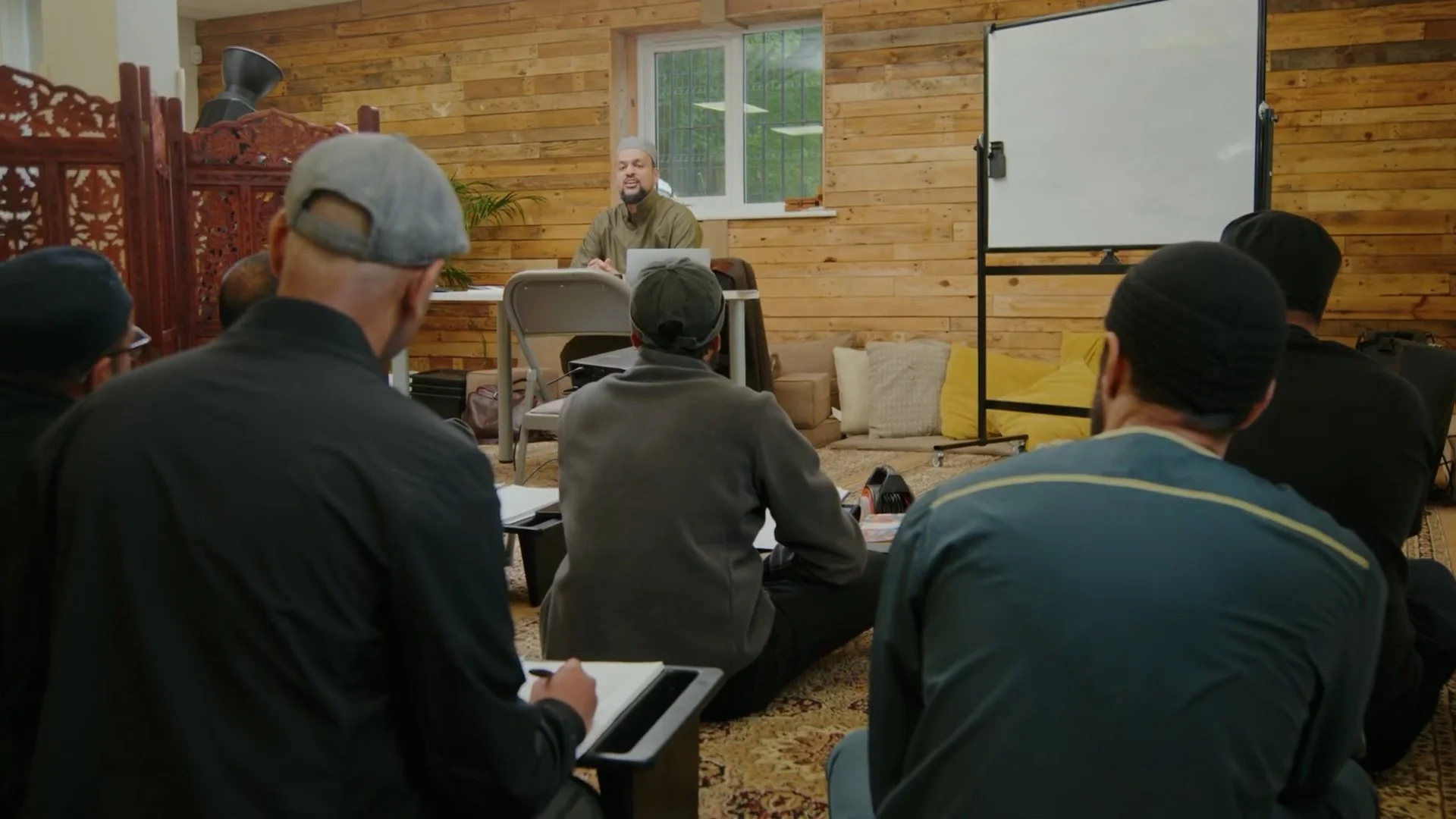
Weekly in-person classes at Sakina House.
Structured Pathway
Designed as the first stage of the Saeed Institute's Islamic Studies pathway.
Faith & Character
Develop not only knowledge but also worship, sincerity, and character.
Certificate Awarded
Receive a certificate upon successful completion.
al-Taʾṣīl
Grounding
al-Tamkīn
Formation
Grounded in the Hanafi Legal and Intellectual Tradition
Designed for committed adult learners, the Seminary combines rigorous academic study with spiritual formation, scholarly companionship and service. Students progress from foundational Islamic knowledge and Arabic to the systematic study of law, legal theory, theology, Qur’anic studies, hadith and the wider Islamic intellectual tradition. The programme covers the principal disciplines traditionally associated with an Alimiyya education
al-Taʾsīs
Foundation Stage — Years 1–2
Al-Taʾsīs means “laying the foundations.” This stage equips students with the linguistic, intellectual and spiritual foundations required for the serious study of Islam.
Students begin developing their Classical Arabic through the study of grammar, morphology, vocabulary and guided reading. Alongside Arabic, they are introduced to the essential teachings of Sunni creed, Hanafi jurisprudence, Qur’anic studies, Hadith, Prophetic biography and spiritual formation.
Particular emphasis is placed upon establishing disciplined study habits, understanding the structure of the Islamic sciences and learning how to approach traditional texts under the guidance of a teacher.
By the end of this stage, students should possess a firm grounding in the essentials of the religion, a developing ability to read introductory Arabic texts and the academic foundations required to proceed to intermediate study.
Students who successfully complete the first two years receive the Foundation Certificate in Classical Arabic and Islamic Studies.
al-Taʾsīl
Intermediate Stage — Years 3–4
Al-Taʾṣīl refers to establishing a person firmly upon sound foundations and principles. At this stage, students move beyond introductory study and begin engaging more closely with the recognised disciplines and texts of the Islamic scholarly tradition.
Arabic study becomes increasingly text-based, enabling students to read, analyse and discuss classical works with greater independence. Students deepen their study of Hanafi jurisprudence and are introduced more systematically to legal theory, Qur’anic exegesis, Hadith methodology, theology and the principles governing the transmission and interpretation of Islamic knowledge.
The aim of this stage is not simply to increase the amount of information studied, but to help students understand how the different Islamic sciences relate to one another. They begin to recognise scholarly terminology, follow legal and theological arguments and appreciate the methods through which the tradition was preserved and developed.
By the end of Al-Taʾṣīl, students should be able to engage meaningfully with intermediate Arabic texts, understand the foundational methodologies of the major disciplines and approach complex questions with greater intellectual clarity and scholarly discipline.
The Three Levels
al-Tamkīn
Advanced Stage — Years 5-6
Al-Tamkīn denotes firmness, maturity and established competence. This final stage is devoted to the integration, application and responsible communication of the knowledge acquired throughout the programme.
Students undertake advanced study in Hanafi jurisprudence, legal theory, legal maxims, intra-madhhab analysis, Qur’anic studies, Hadith, Sunni theology, Arabic rhetoric and Islamic intellectual history. They also examine contemporary questions and consider how inherited scholarly principles may be applied responsibly within changing social and intellectual contexts.
Greater attention is given to research, academic writing, teaching, pastoral responsibility and the ethics of scholarship. Students learn to distinguish between personal reflection, academic analysis and authoritative religious judgement, while recognising the limits of their own training and the importance of continued study under qualified scholars.
The programme concludes with a substantial research project, translation, legal study or educational project through which students demonstrate their ability to work carefully with traditional sources and present their findings in a clear and disciplined manner.
Graduates of Al-Tamkīn should possess the foundations necessary for responsible teaching, research, community service and further specialisation in the Islamic sciences.
Islamic Foundations (Al-Taʾsīs)
Autumn Semester 2026
Applications are now open for Islamic Foundations (Al-Taʾsīs), the opening stage of the Saeed Seminary programme in Classical Arabic and the Islamic Sciences.
The Autumn Semester will run for 13 teaching weeks, beginning on Sunday 13 September 2026.
Islamic Foundations is designed for students who wish to begin a structured journey through the Islamic scholarly tradition while retaining the flexibility to study around work, family and other commitments.
A Flexible Modular Programme
Islamic Foundations is delivered through a modular system.
Students accepted onto the Foundation Stage may choose to enrol on one, two or all three modules offered during the Autumn Semester.
Each module is studied and assessed independently. Successfully completed modules are added to the student’s Seminary academic record and contribute towards the requirements of the:
Foundation Certificate in Classical Arabic and Islamic Studies
Students are therefore not required to complete every module at the same time. They may progress through the Foundation Stage at a pace suited to their circumstances, while remaining part of a structured and coherent programme of study.
Autumn Semester Modules
FIQ 101 - Foundations of Hanafi Fiqh I (The Fiqh of Purification)
Sundays, 12:30pm–2:30pm
13 September–6 December 2026
13 teaching weeks
This module provides a systematic introduction to the Hanafi rulings of purification. Students will study the principles and practical rulings relating to:
Water and its legal classifications
Physical impurities and their removal
Wuḍūʾ
Ghusl
Tayammum
Wiping over footwear
Menstruation and related matters
Contemporary questions concerning purification
The module aims to give students both a reliable understanding of the rulings and an introduction to the method and terminology of Hanafi jurisprudence.
ARB 101 - Naḥw I - Foundations of Classical Arabic Grammar
Sundays, 10:00am–12:00pm
13 September–6 December 2026
13 teaching weeks
Naḥw I introduces students to the foundations of Classical Arabic syntax.
Through structured lessons, exercises and guided reading, students will begin developing the grammatical knowledge required to understand the Qur’an, Hadith and the classical texts of the Islamic scholarly tradition.
The module will introduce essential topics including:
The principal categories of Arabic words
Nominal and verbal sentences
Grammatical case endings
The subject and predicate
The verb, subject and object
Prepositions and particles
Basic sentence analysis and translation
No previous study of Classical Arabic is required but completion of mastering Arabic 1 is recommended.
ARB 102 - Ṣarf I - Foundations of Classical Arabic Morphology
Wednesdays, 7:00pm–8:00pm
16 September–9 December 2026
13 teaching weeks
Ṣarf is the study of how Arabic words are formed and how their patterns convey meaning.
This module introduces students to the essential principles of Arabic morphology, enabling them to recognise word patterns, understand verbal forms and develop greater accuracy when reading Classical Arabic.
Topics will include:
Roots and morphological patterns
Past, present and command verbs
Active and passive forms
Verbal nouns
Common derived verb forms
Conjugation and word analysis
Naḥw and Ṣarf complement one another and together provide the linguistic foundation required for the study of classical Islamic texts.
Choosing Your Modules
Students accepted onto Islamic Foundations may select one of the following study options:
One Module - Students may study a single module according to their particular interest or availability.
Two Modules - Students may combine two modules, such as:
Naḥw I and Ṣarf I
Naḥw I and Fiqh I
Ṣarf I and Fiqh I
Full Semester Programme - Students may enrol on all three modules and complete the full Autumn Semester offering.
Students intending to progress through the complete Seminary programme are strongly encouraged to study Naḥw I and Ṣarf I together, where possible, as both disciplines form part of the Classical Arabic pathway.
Fees
One module£140 I Any two modules£250 I All three modules£320
Payment may be made either:
In full before the semester begins; or
Through an agreed monthly payment plan
The fee includes:
Live weekly teaching
Course notes and learning materials
Access to recordings where available
Module assessments
Tutor guidance
A record of completed modules
Progress towards the Foundation Certificate
Books required for individual modules may need to be purchased separately.
Assessment and Completion
Each module will include appropriate forms of assessment, which may include:
Written exercises
Homework
Reading and translation tasks
Short tests
A final module assessment
Attendance and participation requirements
Students who successfully complete a module will have it formally recorded on their Seminary transcript.
Completion of all required Al-Taʾsīs modules will lead to the award of the:
Foundation Certificate in Classical Arabic and Islamic Studies
Students may then apply to progress to Al-Taʾṣīl, the intermediate stage of Saeed Seminary.
Who Is the Programme For?
Islamic Foundations is suitable for:
Adults beginning the formal study of the Islamic sciences
Students seeking a structured introduction to Hanafi fiqh
Those wishing to learn Classical Arabic
Madrasa graduates seeking to continue their studies
University students and professionals studying alongside other commitments
Students intending to progress through the complete Saeed Seminary programme
Applicants should be committed to regular attendance, independent study and the completion of assessments.
Admissions
Admission to the Foundation Stage is by application.
Applicants who are accepted become students of Saeed Seminary and may enrol on the modules offered during the semester.
This admissions process helps ensure that students are committed to serious study and are able to benefit from the programme.
Applications are now open for the Autumn Semester 2026.
Applicants will apply to join the Islamic Foundations stage and, once accepted, may select one, two or all three modules.
Sunday modules begin: 13 September 2026
Wednesday module begins: 16 September 2026
Semester concludes: 9 December 2026
Places are limited to preserve the quality of teaching and allow meaningful interaction between students and their teachers.
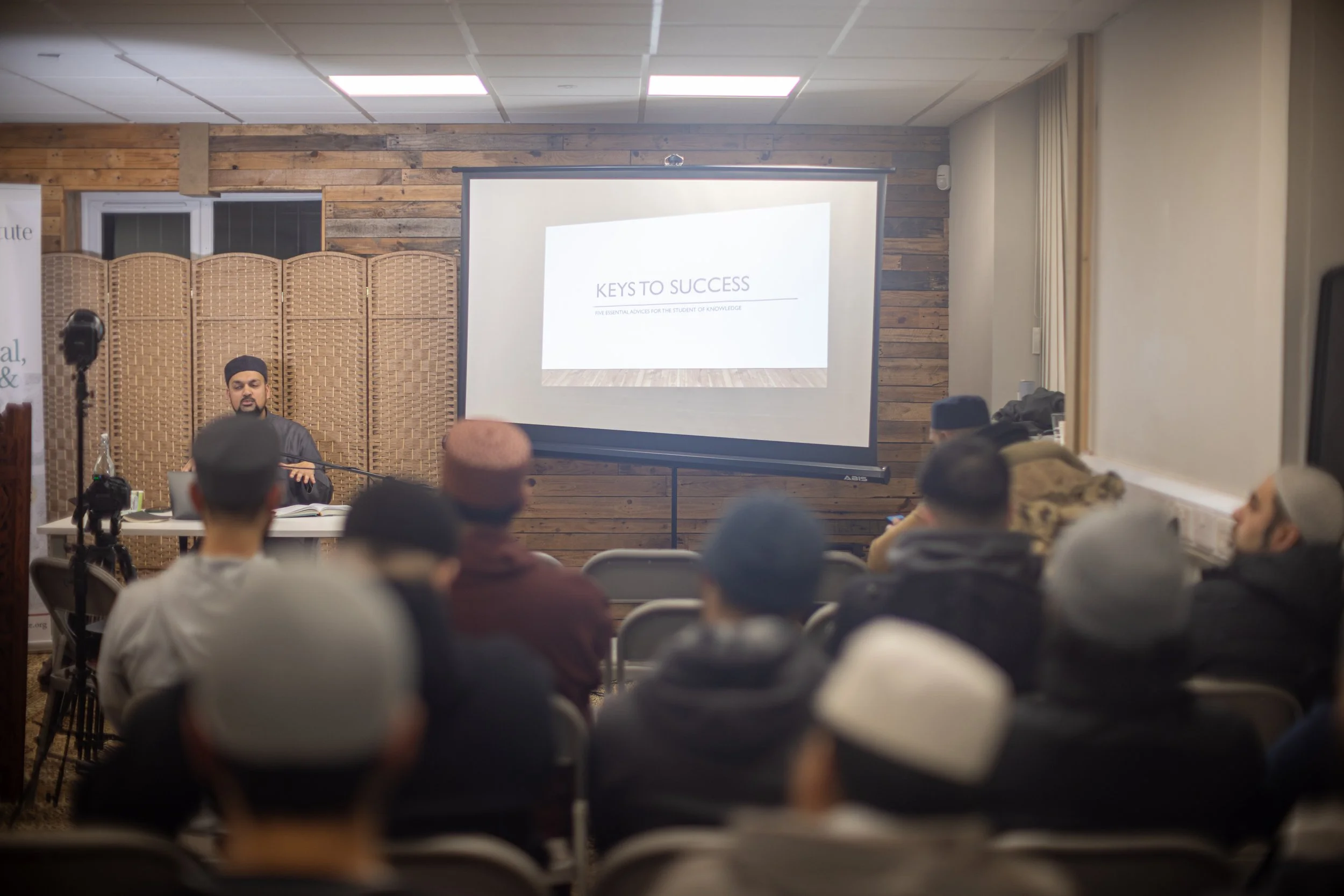
Meet Your Teacher
Shaykh Siddiq Mitha is passionate about helping students build a strong and lasting foundation in the Islamic sciences. Having spent many years studying the classical tradition, he is committed to making authentic Islamic scholarship accessible, engaging, and relevant to everyday life. His teaching combines traditional learning with practical application, encouraging students not only to increase in knowledge but also to grow in faith, character, and love for Allah.
A Pathway for Lifelong Learning
Islamic Foundations is not intended to be a standalone course. It serves as the first stage of the Saeed Institute's long-term vision for Islamic education, preparing students to progress into more advanced Islamic Studies programmes in the years ahead.
Our aim is not simply to teach students what to think, but to equip them with the foundations, discipline, and appreciation of the Islamic scholarly tradition that will enable them to continue seeking knowledge throughout their lives.
Knowledge in Community
Sacred knowledge has always been transmitted through companionship, discussion, and shared learning. By studying at Saeed Institute, students become part of a growing community of seekers committed to learning, worship, and service.
Frequently Asked Questions
-
This course is taught fully in English and no Arabic is needed. However, we expect students to be able to read the Arabic script.
-
Course books are not provided. However, they will be made available for purchase.
Any handouts that are not published books, will be made available to all students for free.
-
Unlike many introductory courses, Islamic Foundations is built around the study of four classical texts in fiqh, creed, spirituality, and the etiquette of seeking knowledge. Rather than isolated lessons, students follow a structured curriculum that combines authentic scholarship, spiritual development, and practical application. The programme also serves as the first step towards the Saeed Institute's future advanced Islamic Studies pathway.
-
Yes. The course is open to both males and females
-
Students will be encouraged to review their notes, revise key concepts, and complete light reading between classes. While the workload is manageable, consistent revision will greatly enhance the learning experience.
-
Islamic Foundations has been designed as the first stage of the Saeed Institute's educational pathway. Graduates will be well prepared to continue into the Institute's future advanced Islamic Studies programmes as they are introduced.
-
We are committed to making Islamic education as accessible as possible. A limited number of partial scholarships and financial assistance may be available for students experiencing genuine financial hardship.
If the course fee would prevent you from attending, please contact us in confidence to discuss your circumstances. Each request is considered on an individual basis, and while we are unable to guarantee assistance, we will do our best to help where possible.
-
Please contact us on: courses@saeedinstitute.org